What to Eat in Wroclaw: 15 Dishes You Must Try
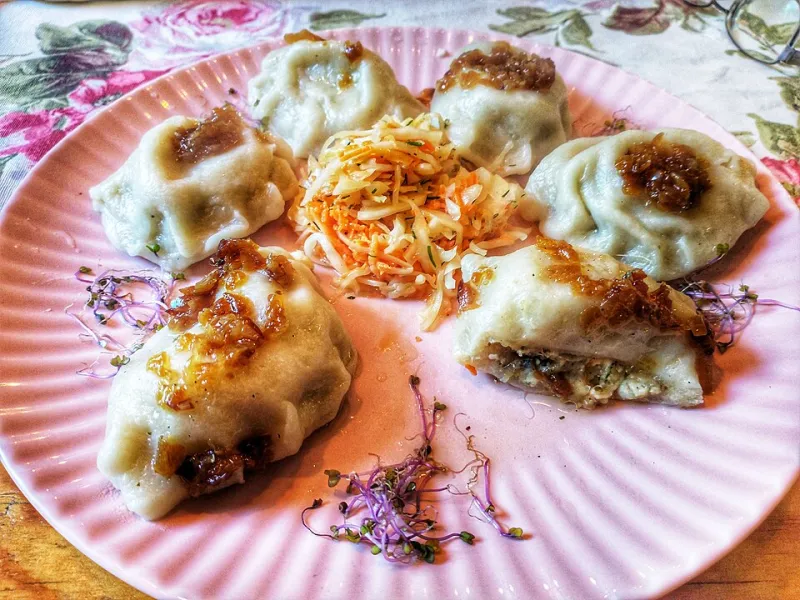
You could spend a week eating in Wroclaw and not repeat yourself. Poland's fourth-largest city sits in Silesia — a region with its own distinct culinary traditions that you won't find in Krakow or Warsaw. From handmade pierogi to slow-braised beef roulades, sour rye soup served in bread bowls to modern tasting menus from Michelin-recognized chefs — this is what to put on your plate.
Polish Classics
These dishes define Polish cuisine. You'll find them everywhere, but quality varies wildly. Here's what each one actually is and where to find the best version in Wroclaw.
1. Pierogi
Poland's most famous export. Pierogi are filled dumplings — thin dough pockets pinched shut and either boiled (soft, pillowy) or pan-fried (crispy, golden). The fillings tell you everything about the place:
- Ruskie — potato and farmer's cheese. The most popular. Not actually Russian — "Rus" refers to the Ruthenian region
- Z miesem — minced meat filling. Classic comfort food
- Z kapusta i grzybami — sauerkraut and wild mushrooms. The Christmas Eve tradition
- Seasonal — summer brings fruit pierogi: strawberry, blueberry, cherry. Served with cream and sugar
Where: Pierogarnia Stara Paczkarnia on the Rynek (market square) for traditional handmade. PieRogi Vegan at Hala Targowa for creative vegan fillings (champignon, dried tomato, seitan). For upscale seasonal pierogi, fine dining spots like BABA offer refined interpretations. A plate of 8-10 pierogi: 25-35 PLN.
2. Zurek
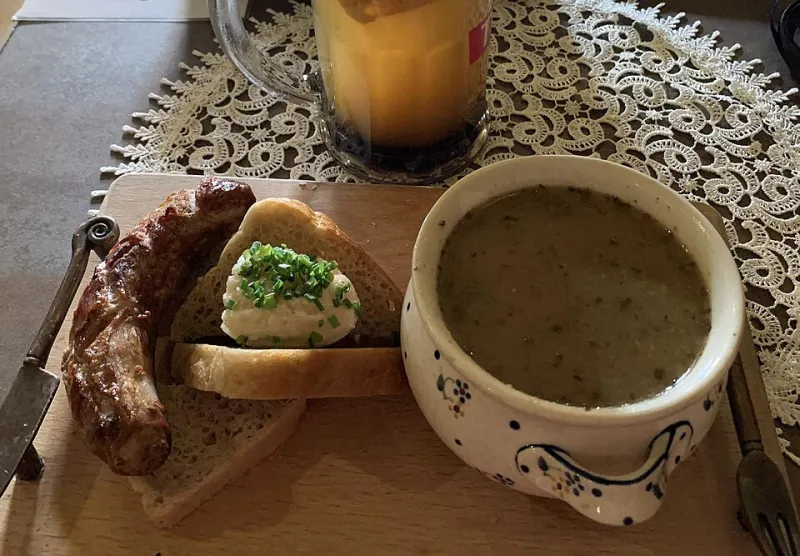
Sour rye soup — and the dish that most surprises first-time visitors to Poland. The base is fermented rye flour (zakwas), which gives it a distinctive tangy, sour depth unlike anything in Western European cooking. Served with white sausage (biala kielbasa) and halved hard-boiled eggs, often in a hollowed-out bread bowl. Rich, warming, slightly funky. The taste of Poland in a single spoon.
Where: Any traditional restaurant menu will have it. Kurna Chata and Konspira do reliable versions. Milk bars serve a simpler, cheaper version. 18-30 PLN at restaurants.
3. Kotlet Schabowy
Poland's answer to Wiener schnitzel — a thick pork cutlet, pounded flat, breaded, and fried golden. Served with mashed potatoes and a simple salad (usually beetroot or sauerkraut). Every Polish grandmother has her own version. It's Sunday dinner, comfort food, national identity on a plate. Not glamorous, but deeply satisfying.
Where: Bar Mleczny Mis (ul. Kuznicza 48) for the cheapest and most authentic version — under 20 PLN. For a more refined take, try Konspira or any traditional Polish restaurant.
4. Bigos
Hunter's stew — Poland's other national dish. Slow-cooked sauerkraut with multiple types of meat (sausage, bacon, sometimes game), dried mushrooms, and prunes. Every family recipe is different. It tastes better on day two and three. Hearty, complex, and deeply savory. A winter staple.
Where: Traditional restaurants and milk bars. Best in autumn and winter when menus feature heartier dishes. 20-35 PLN.
5. Placki Ziemniaczane
Crispy potato pancakes — grated raw potatoes mixed with egg and flour, fried until golden and crunchy on the outside, soft inside. Served with sour cream, or topped with goulash or mushroom sauce. Simple, cheap, satisfying. A menu staple from milk bars to modern Polish restaurants.
Where: Bar Mleczny Mis for the budget version (under 15 PLN). Kurna Chata for a more substantial portion with toppings.
The Silesian Trio
This is what makes Wroclaw different from Krakow or Warsaw. Silesian cuisine has its own identity — shaped by centuries of German, Czech, and Polish influence. The holy trinity of Silesian cooking is served together as one dish, and you'll find it on menus across the city.
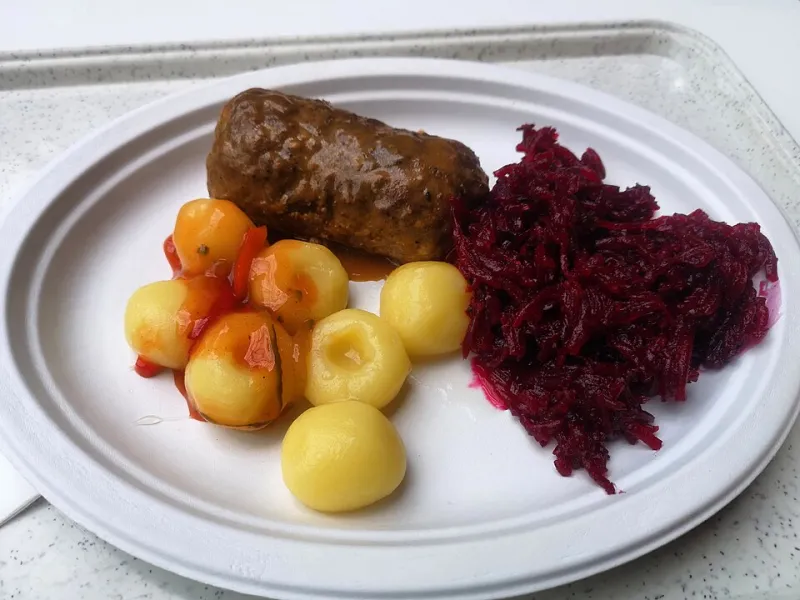
6. Rolada Slaska + Kluski Slaskie + Modra Kapusta
Order this as one plate — it's the Silesian Sunday dinner:
- Rolada slaska — beef roulade stuffed with pickled cucumber, onion, and bacon, braised until fork-tender. The sauce is the prize
- Kluski slaskie — small potato dumplings with a signature thumb-pressed dimple in the center. The dimple holds the sauce
- Modra kapusta — slowly braised red cabbage, sweet and tangy
This combination rarely appears outside Silesia. If you eat one thing in Wroclaw that you can't get anywhere else, make it this.
Where: Silesian restaurants — Kurna Chata and Jadka do excellent traditional versions. 35-55 PLN.
7. Zymlok Slaski
Silesian meatloaf — dense, well-seasoned, usually served cold as a starter or on bread. Think of it as the Silesian answer to German Fleischkase. Regional delis and traditional restaurants stock it.
8. Krupniok
Silesian blood sausage — dark, rich, flavored with marjoram and allspice. Grilled or pan-fried, served with bread and mustard. Not for the squeamish, but a genuine Silesian specialty. If you like black pudding, you'll love krupniok.
Street Food & Snacks
9. Zapiekanka
Poland's street pizza. A halved baguette topped with sauteed mushrooms, cheese, and ketchup — then grilled until bubbly. The original version is simple and cheap (10-15 PLN). Modern zapiekanki add everything from pulled pork to truffle oil. The quintessential late-night food. Available at street stalls and small shops across the city.
10. Paczki
Polish donuts — but don't think Krispy Kreme. Paczki are dense, yeasted dough balls deep-fried and filled with rose hip jam (marmolada z dzikiej rozy), custard, or chocolate. Traditionally eaten on Fat Thursday (Tlusty Czwartek) before Lent, when bakeries sell millions in a single day. But you can find them year-round at bakeries. 5-8 PLN each.
11. Oscypek
Smoked sheep's cheese from the Tatra Mountains — spindle-shaped with decorative patterns pressed into the rind. Firm, salty, smoky. Typically grilled and served with cranberry jam. Originally from the highlands south of Krakow, but sold at markets and food stalls in Wroclaw. Look for it at the Christmas market (November-January) where it's grilled fresh.
Where: Street vendors near the Rynek, market stalls, and seasonal food events. 8-15 PLN per piece.
Modern Polish
12. The Tasting Menu Experience
Wroclaw's modern Polish chefs are doing something remarkable — taking grandma's recipes and applying Michelin-level technique. Fermented beetroot becomes a vibrant consomme. Pierogi fillings change with the season. Local produce meets fire-based cooking and international training.
Where: Pijalni Wino & Bistro — Chef Tomek Wencek trained at Michelin-starred Coure in Barcelona and brings that precision to seasonal, fire-based Polish cooking. The tasting menu with natural wine pairing (50+ wines available by the glass via Coravin) is Wroclaw's signature dining experience. 150-300 PLN per person.
Also: BABA (Bib Gourmand 2025) — Chef Beata Sniechowska's intimate 20-seat room where the signature "Tribute to Polish Homes" transforms familiar dishes into something extraordinary. Nawa and SFera (both Bib Gourmand) push boundaries further. See our Michelin Guide for the full list.
Drinks You Should Try
13. Natural Wine
Wroclaw is Poland's natural wine capital. Yes, seriously. A small but passionate community of sommeliers and bar owners has built one of Central Europe's most interesting natural wine scenes. The highlight: Pijalni Wino & Bistro's Coravin program with 50+ natural wines by the glass — from Georgian amber to Polish orange wine.
14. Polish Craft Beer
Poland's craft beer revolution is well underway, and Wroclaw has serious options. Browar Stu Mostow (Bridge of a Hundred Bridges brewery) produces acclaimed beers and runs a taproom. Kontynuacja and Targowa Craft Beer offer rotating taps of Polish and international craft. Expect 14-22 PLN per pint.
15. Nalewka
Poland's herbal liqueurs — homemade infusions of fruit, herbs, or spices in vodka or spirit. Every Polish family has recipes. Common flavors: cherry (wisniowka), quince (pigwowka), walnut (orzechowka). Often served as a digestif. Some restaurants make their own. Sip, don't shoot.
Seasonal Calendar
- Spring: White asparagus season (April-June). Fresh strawberries. Rhubarb in desserts. Easter specialties: zurek, white sausage, mazurek (flat Easter cake)
- Summer: Fruit pierogi (strawberry, blueberry, cherry). Fresh salads. Outdoor terrace dining. Wild berry nalewki. Chlodnik — cold beetroot soup, neon pink
- Autumn: Wild mushroom season — porcini and chanterelles appear on every menu. Plum-based dishes. Heavier stews return. Game meats (venison, wild boar)
- Winter: Bigos, zurek, and the Silesian trio at their best. Grzaniec (Polish mulled wine) at the Christmas market. Grilled oscypek. Paczki season builds toward Fat Thursday
Price Guide
For Western visitors, Wroclaw is extraordinary value:
- Milk bar lunch: 15-25 PLN (3-6 EUR)
- Pierogi plate (8-10 pieces): 25-35 PLN (6-8 EUR)
- Casual restaurant dinner: 40-80 PLN (9-18 EUR)
- Mid-range with wine: 120-200 PLN (28-46 EUR)
- Fine dining tasting menu: 250-400 PLN (58-93 EUR)
- Craft beer: 14-22 PLN (3-5 EUR)
- Natural wine glass: 25-55 PLN (6-13 EUR)
Frequently Asked Questions
What is the most famous food in Wroclaw?
Pierogi are Poland's most iconic dish. But what makes Wroclaw specifically unique is the Silesian trio: rolada slaska (beef roulade) with kluski slaskie (potato dumplings) and modra kapusta (braised red cabbage). This combination doesn't exist outside Silesia.
What traditional food should I try in Wroclaw?
Start with: pierogi, zurek (sour rye soup), the Silesian trio, kotlet schabowy (breaded pork cutlet), and placki ziemniaczane (potato pancakes). For street food: zapiekanka (Polish street pizza) and paczki (filled donuts).
Where can I try the best pierogi in Wroclaw?
Traditional handmade: Pierogarnia Stara Paczkarnia on the Rynek. Vegan pierogi: PieRogi Vegan at Hala Targowa. Upscale seasonal: Pijalni Wino & Bistro and BABA.
Is Wroclaw food expensive?
Wroclaw is excellent value for Western visitors. A milk bar lunch costs 15-25 PLN (3-6 EUR). A proper dinner at a mid-range restaurant: 80-150 PLN (18-35 EUR). Even fine dining tasting menus run 250-400 PLN (58-93 EUR) — a fraction of what you'd pay in Paris or London.
What food is unique to Wroclaw and Silesia?
The Silesian holy trinity: rolada slaska (beef roulade), kluski slaskie (potato dumplings with thumb dimple), and modra kapusta (braised red cabbage). Also: zymlok slaski (meatloaf) and krupniok (blood sausage). These rarely appear outside Silesia.
Related Guides
- Silesian Cuisine — Deep dive into regional specialties
- Cheap Eats — Where to eat well under 50 PLN
- Breakfast & Brunch — Best morning spots
- Best Restaurants — Our top picks for dinner
- Natural Wine in Wroclaw — The wine scene explained